
Overview
Client: Boutique luxury property agent
Business structure: Partnership
Goal: Carefully targeted growth using current technologies
Solution: Integrated AI across CRM, inbound marketing, and dashboard.
Stack: OpenAI Assistant API, Pipedrive, Google, and Zapier.
This case study builds on a 2024 marketing program for a luxury property agent where, in 2025, the client sought to expand into premium local office properties while enhancing and elevating their marketing activities to establish a niche in the local market and build stronger relationships with existing clients. A part of this effort involves adapting their marketing strategy, program, and campaign, and taking advantage of today’s now tried and tested AI technology in automating, optimising, and integrating their efforts,
Analysis
Challenge
The 2024 marketing plan identified strong brand equity and domain expertise as key strengths of the luxury property agent, but also revealed structural weaknesses in execution. Marketing activities were largely manual, fragmented across channels, and difficult to measure consistently. High‑value transactions occurred infrequently, making traditional e‑commerce style metrics inappropriate and limiting visibility into marketing effectiveness between sales cycles. Lead follow‑up depended heavily on individual effort rather than systemised workflows, increasing the risk of missed opportunities and inconsistent client experience. As interest in AI‑enabled personalisation and data‑driven decision‑making increased across the real estate sector, the existing setup lacked the data structure and automation capability required to support more advanced marketing practices. The challenge in 2025 was therefore not redefining strategy, but translating an already well‑articulated marketing vision into an operational system capable of supporting scale, insight, and long‑term optimisation.
Marketing Objectives

Strategy
The literature reviewed from property experts like Jones Lang LaSalle (2025), Morgan Stanley (2025), and the Real Estate Academy of Australia (2024), and marketing industry leaders such as Shopify (2025), Adobe (2024), Salesforce (2023), HubSpot (2025), and Pipedrive (2025), converges on a consistent view of GenAI’s role in modern marketing: AI is now a core operational capability rather than an experimental add-on. In real estate specifically, the reports stress that AI adoption is accelerating but remains uneven, creating competitive advantage for early, pragmatic adopters. Key recommended use cases include AI chatbots for immediate enquiry handling, predictive lead scoring, personalised follow-up communications, and analytics-driven campaign optimisation. Guidance also highlights strong consumer acceptance of AI-mediated service interactions and measurable uplifts from AI-assisted personalisation, virtual experiences, and faster response times, particularly important in high-value, low-volume property transactions. At the same time, such research cautions that GenAI in the sector is still maturing and delivers most value when applied within clearly scoped, human-centric workflows, supported by high-quality data and governance. These principles directly informed the design of the 2025 real estate marketing automation solution.
Solution Design
The solution design for the 2025 marketing automation project was intentionally pragmatic, reflecting the scope and maturity of the business and aligning closely with the approach taken in the commercial photography marketing automation case study. Rather than introducing complex or fully autonomous systems, the focus was on integrating lightweight AI automation, formalising marketing data, and configuring three core components of CRM, inbound marketing, and analytics to operate cohesively. The design emphasised clarity, repeatability, and credibility, ensuring that automation augmented existing marketing practices without overstating technical sophistication or business readiness.
AI Automation
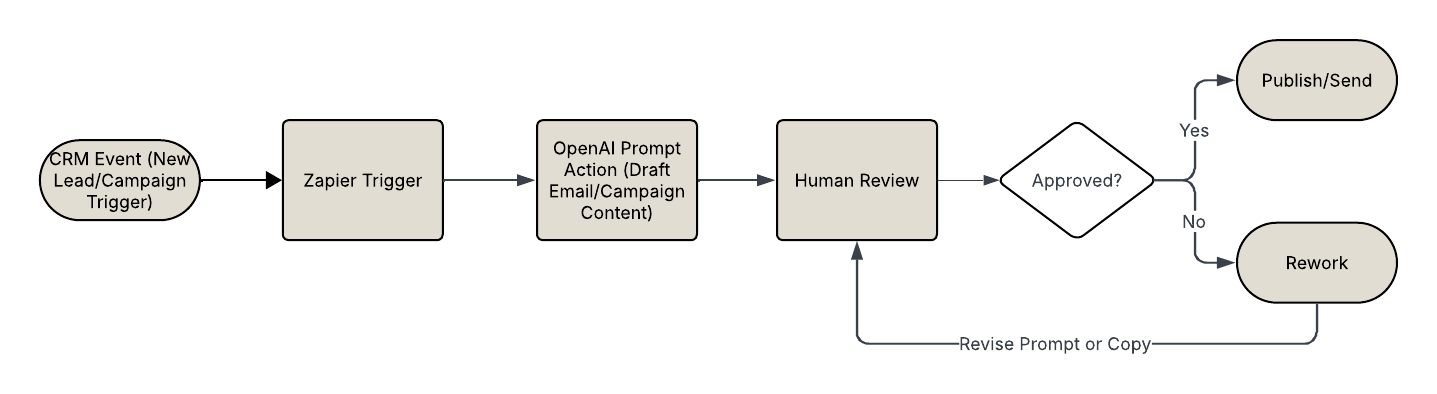
AI automation was implemented selectively, using OpenAI in conjunction with Zapier to support defined marketing tasks rather than end-to-end campaign management. Zapier acted as the orchestration layer, connecting CRM triggers to OpenAI-powered content generation and downstream actions such as email delivery. OpenAI was used to assist with drafting personalised communications and responses based on structured CRM inputs, improving consistency and responsiveness while reducing manual effort. This approach demonstrated how generative AI can be embedded into everyday marketing workflows without requiring deep system integration, while also providing a controlled environment for testing AI-assisted communication in a high-value, relationship-driven market.
Automation Flow Diagram
Data Preparation
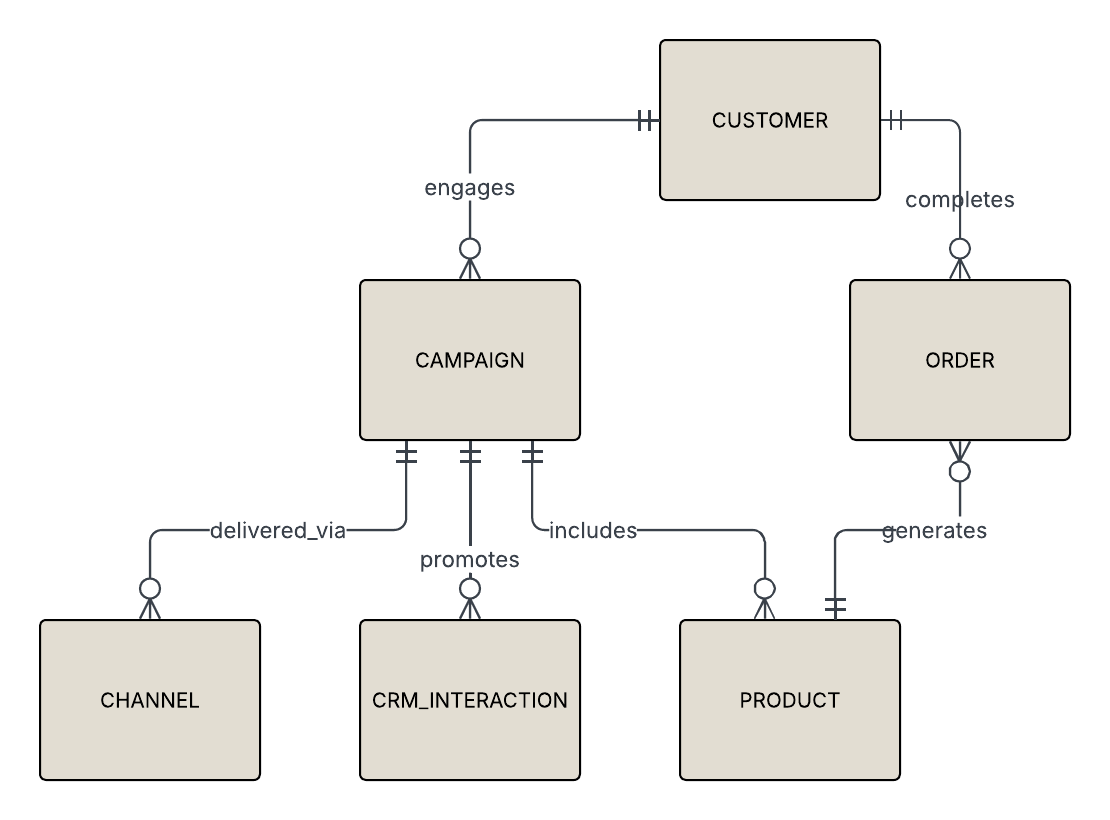
A core outcome of the solution design was the formalisation of marketing and client data through the combined setup of Pipedrive CRM, inbound marketing workflows, and an elevated Looker dashboard. Key data entities included leads, contacts, properties, campaigns, channels, and commission-based revenue events, structured to reflect the low-volume, high-value dynamics of luxury real estate. While implemented as a portfolio MVP using exported and synthetic data, the data model mirrored how a live system would operate, establishing consistent definitions for qualified leads, revenue attribution, and channel performance. This structure provides a foundation for future marketing development, advanced analytics, and broader business management by enabling reliable performance measurement and supporting later adoption of AI-driven insights.
Data Model
CRM, Inbound Marketing, and Dashboard.
Each system component was configured with the specific context of a boutique luxury property agent in mind. Pipedrive CRM was customised to support nuanced lead qualification, property interest tracking, and engagement history, prioritising relationship management over transaction volume. Inbound marketing workflows were designed to automate initial responses and nurture sequences while maintaining a premium tone appropriate to high-net-worth clients.
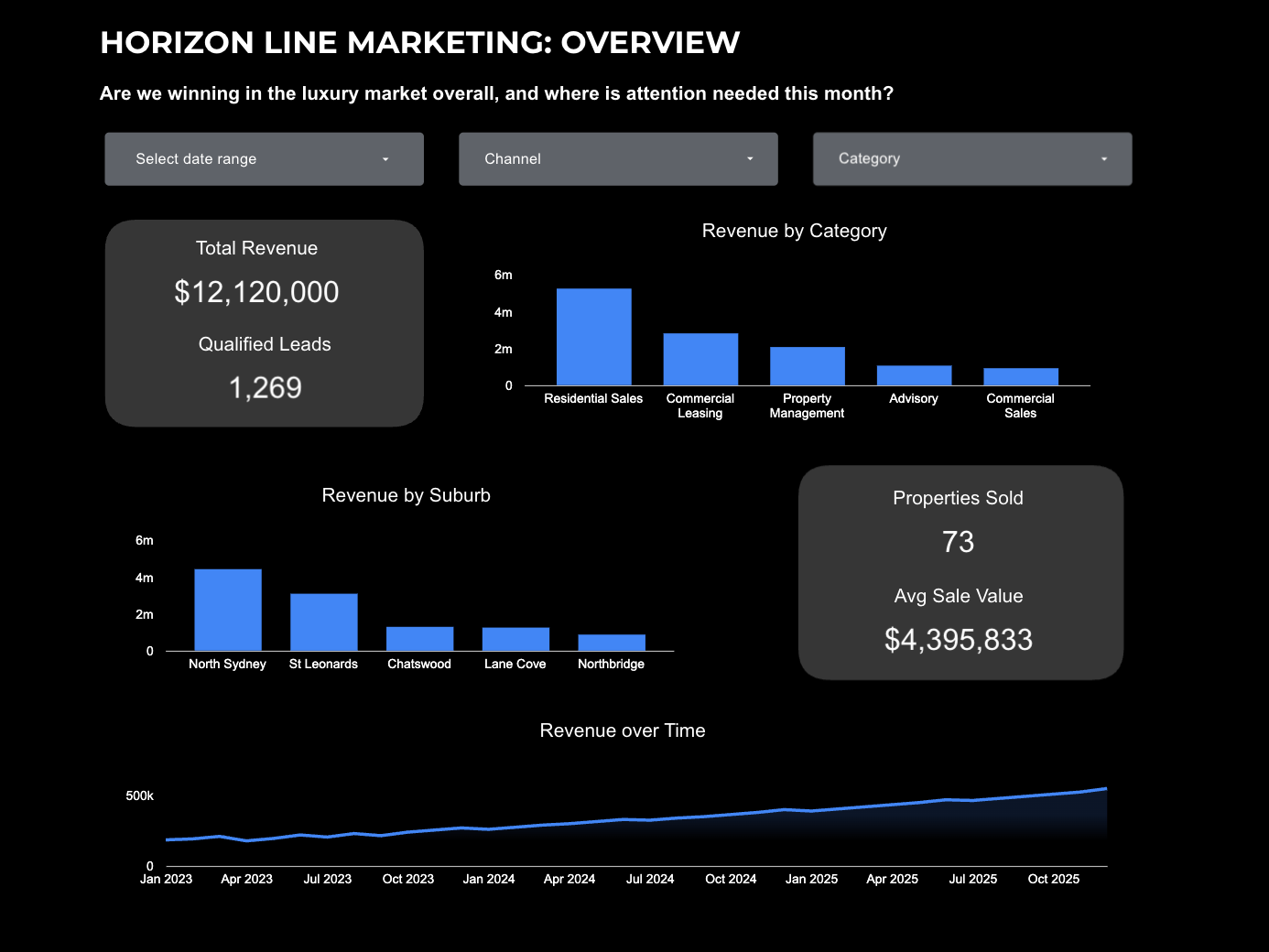
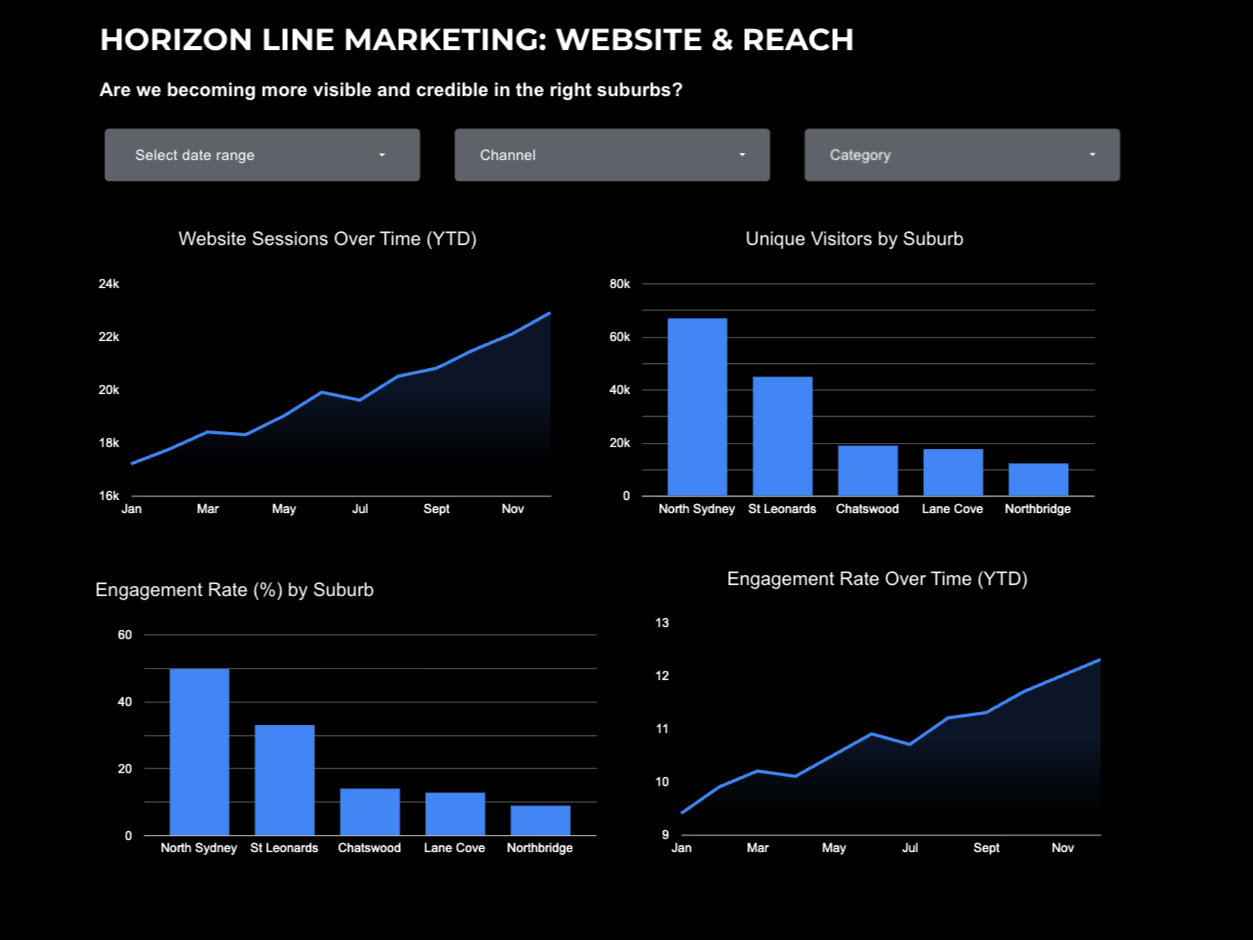
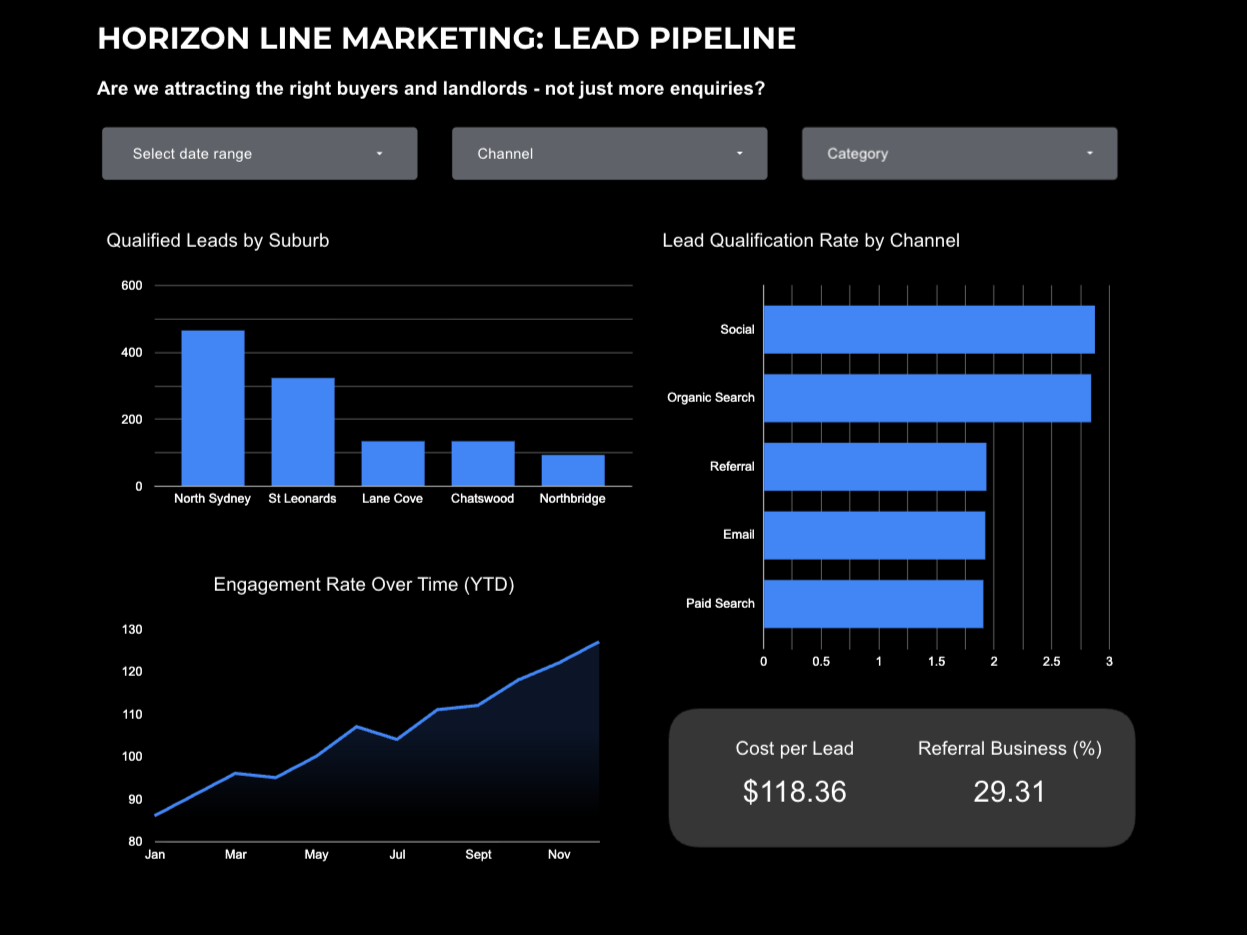
The Looker dashboard was tailored to surface metrics meaningful to the market, such as qualified leads, channel efficiency, commission-based revenue, and return on ad spend, rather than generic e-commerce KPIs. Together, these design choices ensured that automation supported strategic objectives and market realities without introducing unnecessary complexity.
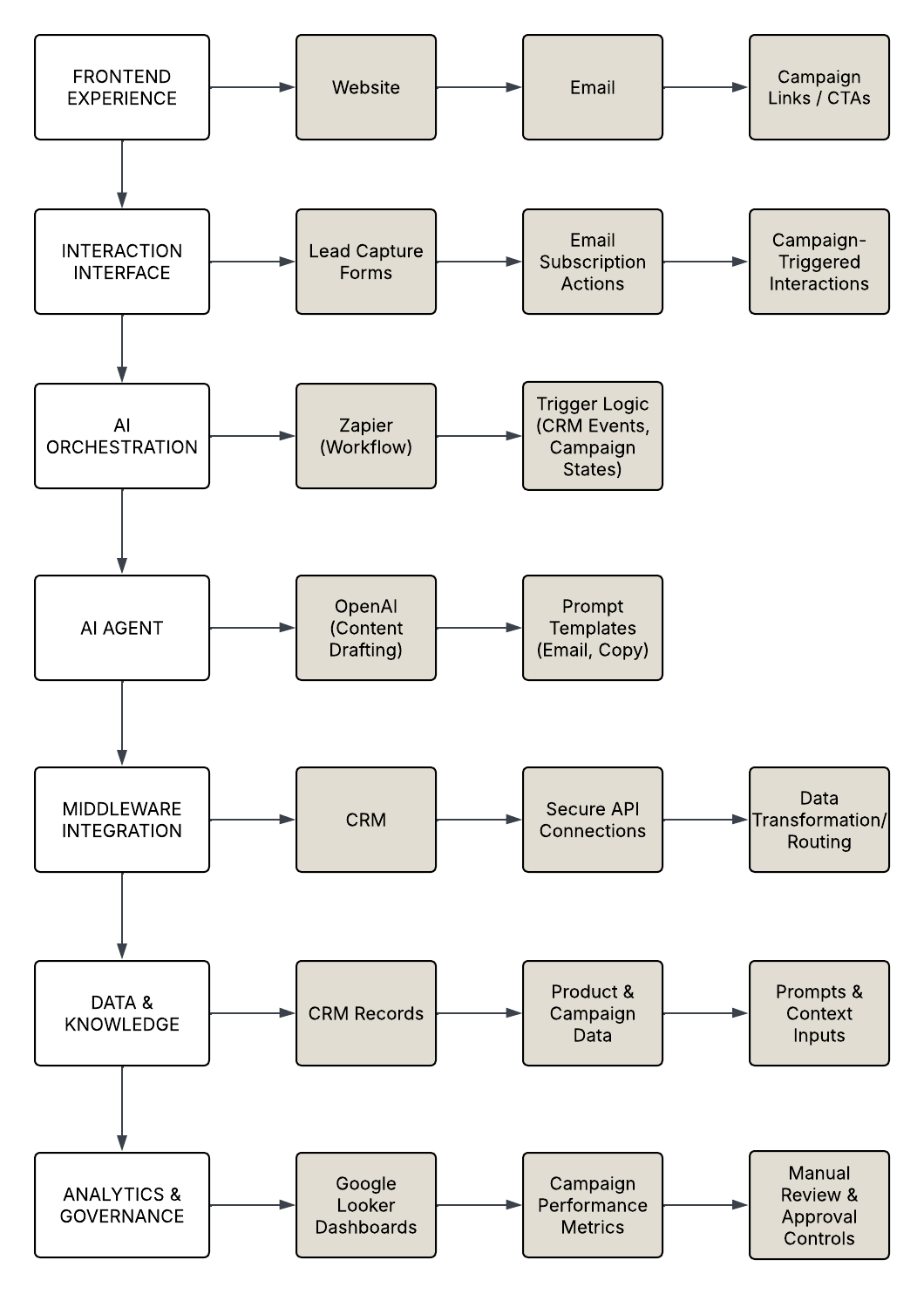
Tech Stack
Results
The marketing automation design delivered a cohesive operational framework capable of supporting the agent’s 2024 marketing strategy at scale. While the system was implemented as a portfolio‑ready MVP rather than a live production environment, it demonstrated clear benefits: improved visibility into marketing performance, reduced reliance on manual follow‑up, and a measurable structure for evaluating channel effectiveness in a low‑volume market. The primary limitation of the design is its reliance on synthetic and exported data rather than live CRM and advertising integrations. This constrained real‑time responsiveness and limited the ability to test adaptive automation under live conditions. Additionally, the system focused on core marketing functions and did not yet incorporate advanced AI capabilities such as predictive lead scoring or dynamic content generation. The integration of CRM, inbound workflows, and analytics established a foundation for continuous improvement and future AI‑driven enhancements, positioning the business to respond more effectively to both market opportunities and client expectations.
CRM

Pipedrive CRM was customised to support nuanced lead qualification, property interest tracking, and engagement history, prioritising relationship management over transaction volume.
Inbound Marketing

Inbound marketing workflows were designed to automate initial responses and nurture sequences while maintaining a premium tone appropriate to high-net-worth clients.
Dashboard

The Looker dashboard was tailored to surface metrics meaningful to the market, such as qualified leads, channel efficiency, commission-based revenue, and return on ad spend, rather than generic e-commerce KPIs.
Limitations

The primary limitation of the design is its reliance on synthetic and exported data rather than live CRM and advertising integrations. This constrained real‑time responsiveness and limited the ability to test adaptive automation under live conditions. Additionally, the system focused on core marketing functions and did not yet incorporate advanced AI capabilities such as predictive lead scoring or dynamic content generation.
Future Directions

Proposed future directions for this project include the introduction of live CRM and advertising integrations to replace exported data, enabling real-time performance monitoring and adaptive automation. With a stable data foundation in place, the system could be extended to support AI-assisted lead scoring, predictive insights, and more advanced personalisation across client communications and campaign design.
Summary
This case study documents the evolution of a boutique luxury real estate marketing program from a strategy‑led digital refresh in 2024 into a structured, AI‑enabled marketing automation system in 2025. The 2024 work established a clear brand position, channel strategy, and performance objectives for a Sydney‑based luxury property agent operating in a highly competitive, low‑volume, high‑value market. Building on that foundation, the 2025 project shifted focus from campaign planning to operationalising marketing through automation, data modelling, and analytics. The outcome is a cohesive system that integrates CRM configuration, inbound marketing workflows, and a purpose‑built performance dashboard tailored to luxury real estate dynamics. The case study demonstrates how disciplined data preparation and automation design can transform a traditionally relationship‑driven industry into one capable of scalable insight generation and continuous performance improvement. A key lesson from this project is the importance of aligning data models and metrics with industry realities. Applying generic e‑commerce assumptions to luxury real estate obscures insight and undermines credibility. The project also reinforced the value of starting with structure through data, knowledge, and information architecture before introducing automation or AI, ensuring that technology amplifies rather than complicates marketing operations.
Bibliography
Adobe (2024). AI marketing. Adobe Business, Blog, 22 July 2024.
HubSpot (2025). How real estate companies get results with marketing automation.
Jones Lang LaSalle (JLL, 2025). Artificial intelligence - implications for real estate. JLL Research, January 2025.
Morgan Stanley (2025). How AI is reshaping real estate. Morgan Stanley, 2 July 2025.
Pipedrive (2025). Real estate marketing automation: Successful strategies and tools. Pipedrive Blog, 3 April 2025.
Real Estate Academy of Australia (REAA, 2024). How can real estate agents optimise AI? REAA, 6 June 2024.
Salesforce (2023). AI marketing automation. Salesforce Blog, 13 December 2023.
Shopify (2025). AI marketing. Shopify Blog, 12 May 2025.
Related Projects

Drone Photography Marketing Automation

Fashion Resale Marketing Automation